AI
EU AI Act: where the tool stands
The platform uses an image analysis engine to propose an inventory. What it does, what it does not do, and how the person keeps the decision at every step.
Contents
What the engine does, and only that
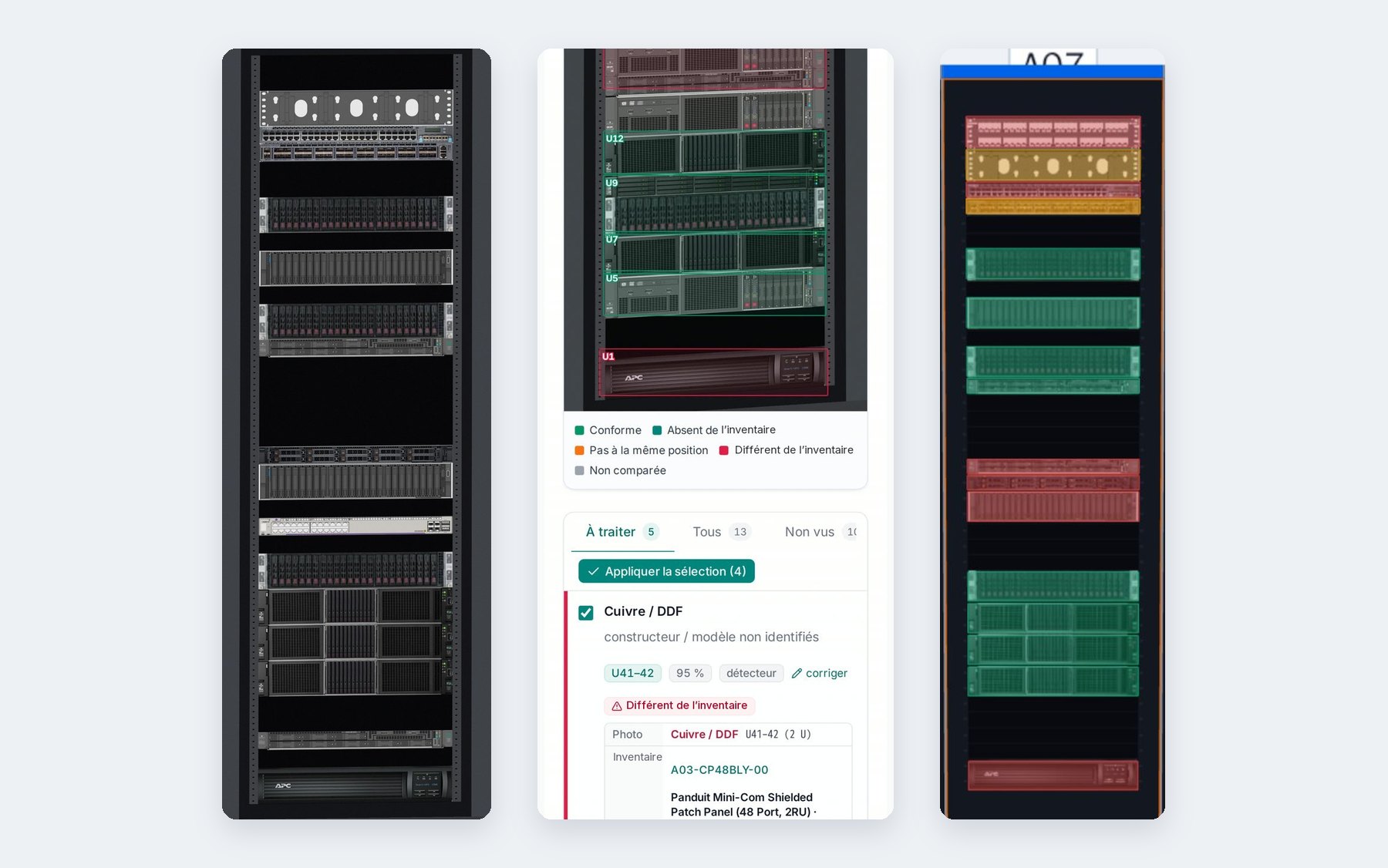
The analysis engine receives a front photo of a rack. It detects the visible equipment and returns, for each item, a bounding box, a family (network, fiber and transmission, power, server, patching), a U position and a confidence level. With a linked inventory, the platform then recognizes the rack among the candidates and compares the photo to the inventory, U by U.
The result is an inventory proposal: a list of equipment and, where applicable, of discrepancies with the reference inventory. The engine makes no decision concerning people. It does not classify individuals, does not assess behavior and does not process biometric data.
Where the tool stands in the regulation
Regulation (EU) 2024/1689 on artificial intelligence classifies systems according to their use. The heaviest obligations apply to high-risk systems, listed in particular in its Annex III: recruitment, access to essential services, law enforcement, and safety components in the management and operation of critical infrastructure.
A tool that proposes an equipment inventory, subject to human approval before any write, is not intended to act as a safety component: it controls no equipment and triggers no action on the network. In our reading, it should therefore not fall under high-risk uses; this analysis remains to be confirmed with your DPO or your legal department, depending on your context of use.
This reading does not exempt you from your own analysis. The classification depends on how you use the tool, your sector and your processes. It is up to your organization, with your DPO, your CISO or your counsel.
The person keeps the decision
Whether or not the tool is high-risk, we designed it around a simple principle: the platform proposes, the person decides. This principle is in line with the spirit of the human oversight described in Article 14 of the regulation.
Doubt is shown, not hidden
Each detection carries its confidence level. An uncertain detection is marked “to check”, with its reason.
Everything can be corrected
Family, position, equipment: each line can be modified or excluded before approval.
Nothing is written without approval
Discrepancies with the inventory are handled line by line, with the photo next to the decision. No write to the inventory takes place without human approval.
A second look if you wish
Optional two-level approval separates the person who proposes from the person who approves.
Transparency and traceability
A user must know that a result comes from an analysis engine and be able to find out how it was produced. In the platform:
- engine detections are flagged as such, distinct from items approved by a person;
- each survey keeps the photo, the engine used and its version, the date and the author;
- decisions taken on discrepancies are recorded in the action log: who, when, on which rack.
You can thus explain, months later, why an inventory line changed and on what basis.
Training users
Article 4 of the regulation asks organizations that deploy an AI system (deployers) to ensure a sufficient level of AI literacy among the people who use it. For an inventory tool, this remains simple: understanding that the engine can be wrong, knowing how to read a confidence level, knowing when to retake a photo.
The onboarding offered during installation covers these points for field and office teams. Its content is defined within the project.
To receive the description of how the engine works and of the processing, contact us.
This page describes the product and how it is designed. It does not constitute legal advice: confirm how it applies to your context with your DPO, your CISO or your counsel.